
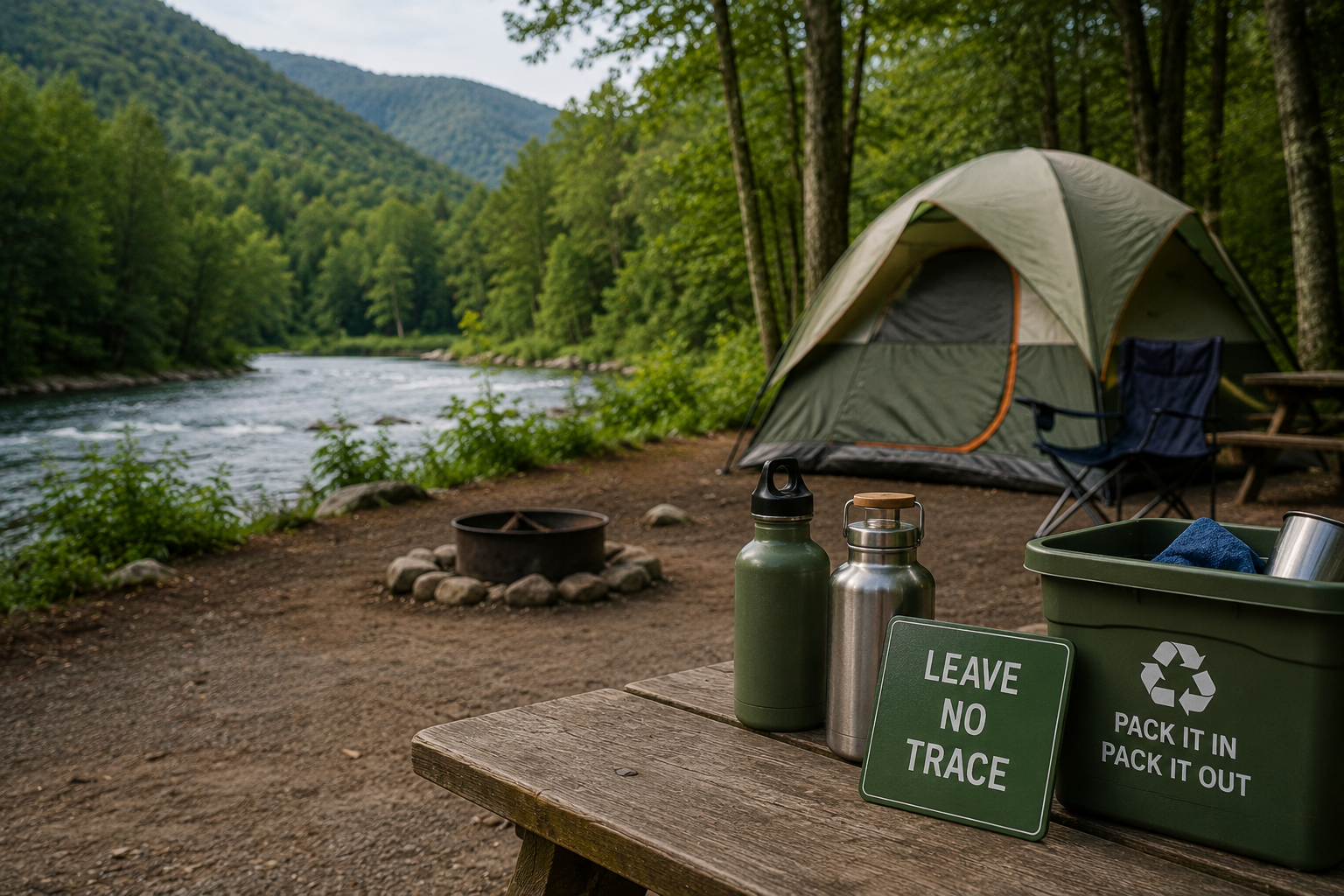
Camping gives us a front-row seat to forests, rivers, mountains, wildlife, and dark night skies. That also gives campers a responsibility to protect the places they travel to.
Fortunately, sustainable camping does not require buying expensive eco-friendly equipment or completely changing the way you travel. Small decisions made by thousands of campers can make a meaningful difference.
Here are some practical habits every traveler can follow in 2026.
1. Pack Reusable Items
One of the easiest ways to reduce campsite waste is to avoid disposable products.
Bring reusable water bottles, mugs, plates, utensils, food containers, and shopping bags.
Instead of buying individual snack packages, divide larger packages into reusable containers before leaving home.
It usually makes the campsite easier to organize too.
Reusable gear does not have to be expensive or designed specifically for camping. Items you already use at home may work perfectly well.
2. Plan Meals Before Leaving
Food waste is easy to create when camping because people often pack more than they need.
Plan your meals and approximate portions before shopping.
Preparing ingredients at home can also reduce the amount of packaging that reaches the campsite. Store food carefully and keep coolers organized so ingredients don’t disappear underneath melting ice until it is too late to use them.
Good meal planning saves money while supporting sustainable camping.
3. Dispose of Waste Properly
Never assume that something biodegradable can simply be thrown into the woods.
Orange peels, apple cores, food scraps, paper, and other materials can still affect wildlife and take time to break down.
Pack out waste and use designated disposal facilities.
Great Smoky Mountains National Park specifically requires campers to dispose of garbage properly and keep food and scented items secured because the park is black bear habitat.
Campers visiting the Smokies should review the National Park Service campground regulations before their trip.
4. Protect Wildlife by Keeping Your Distance
Seeing wildlife can become one of the most memorable parts of a camping trip.
Keep it wild.
Never feed animals or leave food where they can access it. Human food can change animal behavior and create dangerous situations for both wildlife and visitors.
Store food, garbage, cooking equipment, and scented products according to local regulations.
If wildlife photography is part of your plans, use distance and zoom rather than approaching an animal for a better photograph.
5. Stay on Established Trails
Cutting across a switchback might save a few minutes, but repeated shortcuts can damage vegetation and contribute to erosion.
Use established trails and respect barriers and closures.
This becomes particularly important in popular destinations where millions of feet can have a cumulative effect on the landscape.
Arrow Creek’s guide to the best sunrise and sunset hikes near the campground can help you choose established routes for your Smoky Mountain adventure.
6. Be Responsible With Campfires
A campfire can be one of the best parts of camping, but it needs to be handled responsibly.
Use established fire rings where required, never leave a fire unattended, and make sure it is completely extinguished.
Firewood is another consideration.
Great Smoky Mountains National Park permits only qualifying heat-treated firewood brought into the park, although campers may collect dead and down wood within the park where permitted. These rules help reduce the movement of destructive forest pests.
Check local rules rather than transporting firewood from home.
7. Reduce Unnecessary Energy Use
Modern campers travel with more electronics than ever.
Phones, tablets, lights, fans, TVs, computers, refrigerators, and other appliances all consume energy.
Turn devices off when they aren’t being used and choose efficient lighting and appliances when practical.
RV travelers can use energy-monitoring systems to better understand where electricity is going. Arrow Creek’s article on RV technology upgrades worth considering in 2026 discusses smart energy monitoring, solar power, lithium batteries, and efficient LED lighting.
Technology and sustainability do not have to work against each other.
8. Use Water Carefully
Fresh water may seem unlimited at home, but camping makes you much more aware of how quickly it can be consumed.
Take shorter showers, turn off faucets while brushing your teeth, and avoid unnecessarily running water while washing dishes.
RV travelers should also dispose of wastewater only in approved locations.
Within Great Smoky Mountains National Park, dishwater and bathwater must be drained at utility sinks or dump stations rather than onto the ground.
9. Keep Campsites Quiet and Dark
Sustainability is not only about trash and fuel.
Noise and excessive artificial light can affect wildlife and other campers.
Avoid unnecessary exterior lighting and keep music at a respectful volume. Switch outdoor lights off when you no longer need them.
One of the joys of camping is experiencing a naturally dark environment that many people rarely see at home.
10. Leave the Campsite Better Than You Found It
Before leaving, spend five minutes walking around your site.
Look under the picnic table, around the fire ring, beside the RV, and anywhere children have been playing.
Pick up bottle caps, food wrappers, pieces of plastic, fishing line, and other small items, even if they were there when you arrived.
The National Park Service encourages Leave No Trace practices throughout the Smokies, including packing out what you bring into natural areas.
Sustainable Camping Is Mostly About Awareness
You do not need a completely solar-powered RV or a backpack filled with specialized environmental products to practice sustainable camping.
Start with the basics.
Create less waste. Use water carefully. Keep food away from wildlife. Stay on trails. Follow fire regulations. Reduce unnecessary energy use. Respect other campers. Leave natural objects where you find them.
These habits may seem small during a single weekend, but outdoor destinations receive visitors year after year.
The goal is simple: enjoy the Smokies today without making the experience worse for the campers who arrive tomorrow.