
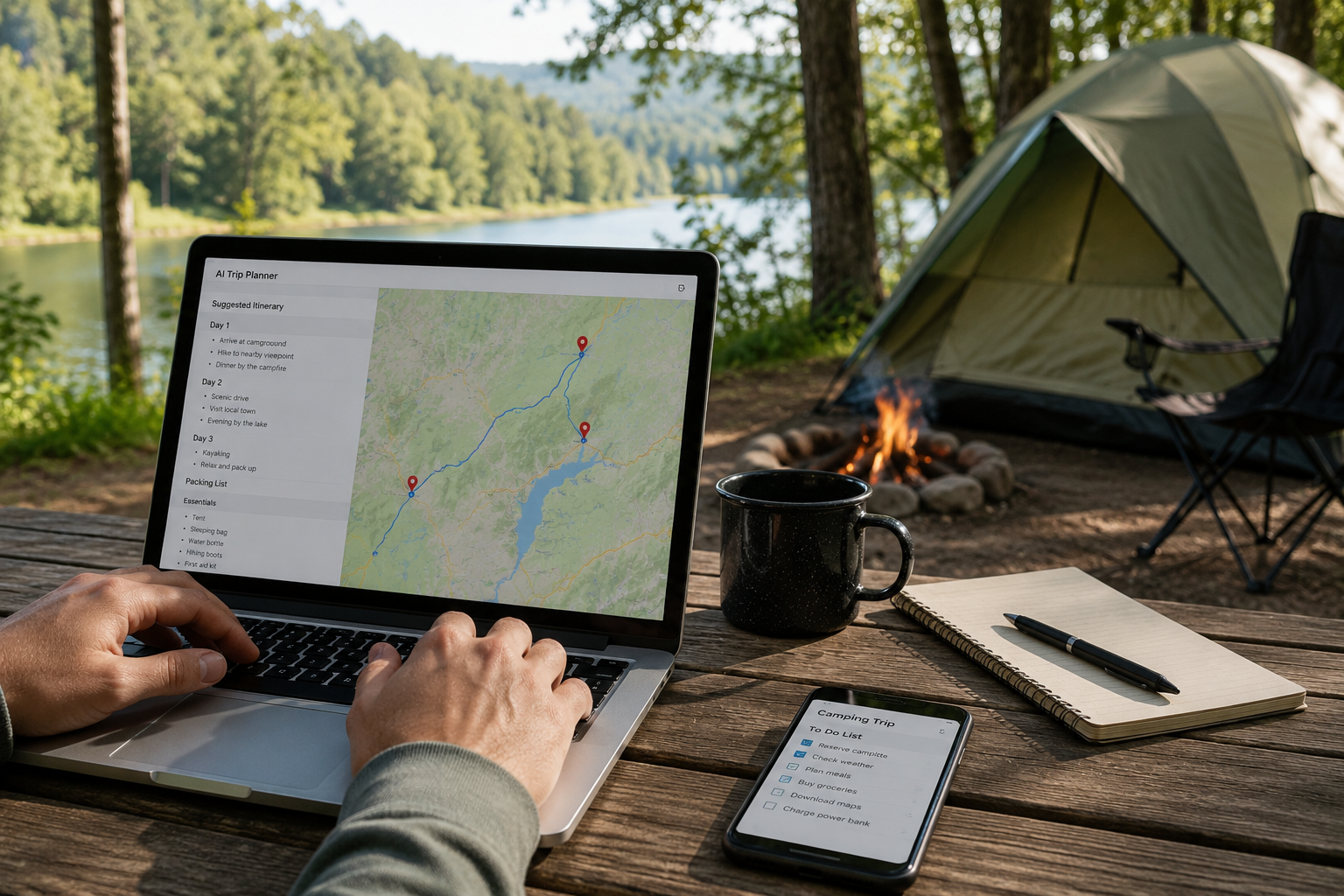
Planning a camping trip once meant spreading maps across the kitchen table, calling campgrounds, buying guidebooks, and writing packing lists by hand.
Today, travelers can ask an AI tool to build a three-day Smoky Mountain itinerary in seconds.
AI camping trip planning is changing how people research destinations, organize routes, create packing lists, compare activities, and prepare for outdoor adventures. It can save considerable time, but it works best when travelers understand both its strengths and its limitations.
AI Can Turn an Idea Into an Itinerary
One of the biggest advantages of AI is its ability to organize scattered ideas.
Suppose you are planning four days near Gatlinburg. You want one moderate hike, a scenic drive, wildlife viewing, something children can enjoy, and enough free time to relax around the campground.
Instead of researching each part separately, you can provide those preferences to an AI assistant and ask it to build a sample schedule.
You can make the request even more useful by including:
- Trip dates
- Number and ages of travelers
- Hiking ability
- RV, cabin, or tent accommodation
- Interests
- Budget
- Dietary requirements
- Activities you want to avoid
The more useful information you provide, the more relevant the suggested itinerary can become.
Families can then compare those suggestions with Arrow Creek’s guide to planning a multigenerational Smoky Mountain camping trip when traveling with children, parents, and grandparents.
Smarter Packing Lists
Packing is another area where AI camping trip planning can be helpful.
A generic camping checklist might tell everyone to bring the same equipment. AI can create a list around the specific trip.
For example, someone staying in a cabin for three nights needs very different equipment from someone tent camping or spending several weeks in an RV.
You can ask AI to create separate lists for clothing, cooking equipment, hiking gear, children’s items, pet supplies, electronics, and emergency equipment.
It can also help you create a “last-minute checklist” covering easy-to-forget items such as charging cables, medications, flashlights, batteries, rain jackets, and reservation confirmations.
AI Can Help Compare Activities
The Gatlinburg area gives visitors plenty of choices, which can actually make planning harder.
Should you spend the morning hiking or exploring town? Which activities work for young children? What can you do if it rains?
AI tools can organize possibilities around your group’s preferences.
For example, you could ask for a relaxed morning activity followed by an afternoon near Gatlinburg, or request alternatives for a rainy day.
Arrow Creek’s last chance summer adventures guide is another useful resource when researching local activities.
Route Planning Is Getting More Personalized
AI can also help break a long RV journey into manageable sections.
Travelers can use it to organize potential fuel stops, meal breaks, overnight stops, sightseeing opportunities, and driving periods.
RV owners can take this further by asking for routes that account for a larger vehicle.
However, never rely solely on a general AI tool for RV routing. Bridge heights, weight restrictions, road closures, steep grades, and construction can create serious problems.
Use dedicated navigation tools and official road information to verify the final route.
Arrow Creek also publishes directions to the campground for visitors traveling toward Gatlinburg.
AI Doesn’t Replace Current Information
This is probably the most important rule.
AI can produce a convincing answer that is outdated, incomplete, or simply wrong.
A trail it recommends might be temporarily closed. A road could be under construction. Reservation policies can change. Weather conditions can make an otherwise reasonable itinerary unsafe.
Great Smoky Mountains National Park maintains current cautions and closures through the National Park Service. Travelers should verify trail and road conditions there before heading out.
Similarly, Recreation.gov’s Trip Builder provides official tools for researching federal recreation opportunities and building trips.
Think of AI as the assistant that creates your first draft, not the authority that makes the final decision.
AI Can Help Control the Trip Budget
Camping can be affordable, but expenses add up.
Fuel, campsite fees, food, attraction tickets, parking, equipment, and unexpected purchases can turn a simple weekend into an expensive trip.
AI can create a basic budget before you leave.
Tell it how many people are traveling, how long you’re staying, how far you’re driving, and which paid activities you’re considering. It can organize estimated expenses into categories and help identify areas where you might save.
You can then replace estimates with actual prices as reservations are made.
It Can Also Reduce Overplanning
Ironically, one of the best uses of AI may be helping travelers plan less.
Ask an AI tool to create an itinerary with only one major activity each day and plenty of unstructured time.
Camping shouldn’t feel like completing a spreadsheet.
Leave room for an unexpected wildlife sighting, an afternoon by the pool, a longer-than-planned breakfast, or an evening around the fire.
Technology should reduce the stressful parts of planning without removing the spontaneity that makes outdoor travel enjoyable.
A Better Way to Use AI for Your Next Camping Trip
The most effective AI camping trip planning combines technology with reliable local information.
Use AI to generate ideas, organize packing lists, build a rough itinerary, compare options, and identify questions you haven’t considered.
Then verify important information through official sources, campground information, weather forecasts, maps, and current park alerts.
That combination gives you the best of both worlds: faster planning without blindly trusting an algorithm.
And once you arrive at camp, put the phone down occasionally. AI might help plan the adventure, but the best part still happens outside the screen.