
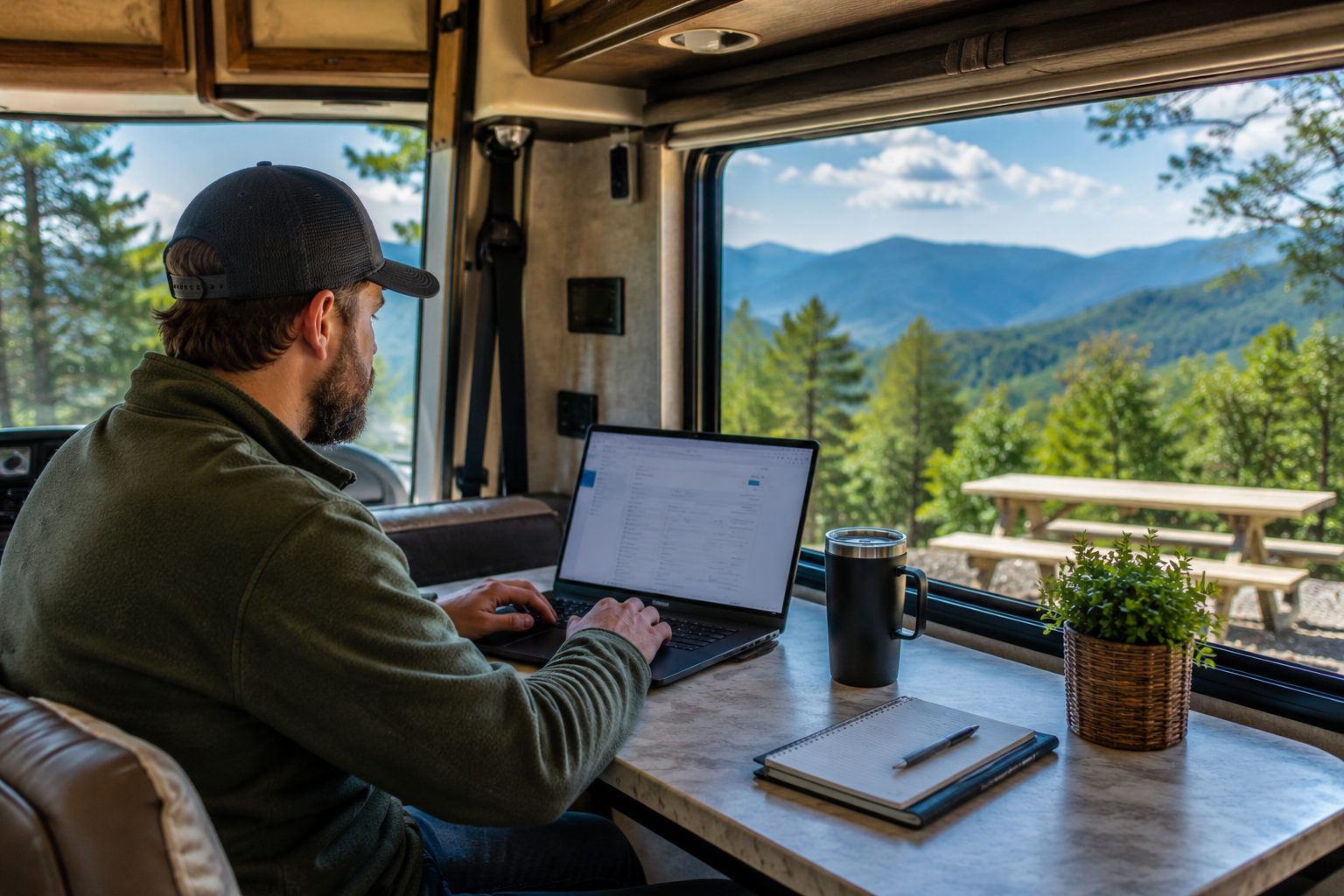
For years, camping trips required taking time away from work. You packed the RV, turned on your out-of-office message, and tried to fit as much adventure as possible into a long weekend or one precious week of vacation.
Remote work has started to change that equation.
Instead of choosing between earning a paycheck and spending more time outdoors, some remote workers are taking their jobs on the road. An RV becomes both accommodation and office, while a campground becomes a temporary home base for exploring a new destination before work, after hours, and on weekends.
That approach is particularly well suited to the Smoky Mountains. With Gatlinburg, Great Smoky Mountains National Park, scenic drives, hiking trails, and countless outdoor activities nearby, work-from-campground travel can turn an ordinary workweek into something much more memorable.
What Is Work-from-Campground Travel?
Work-from-campground travel is exactly what it sounds like: staying at a campground while continuing to work remotely.
Instead of using a hotel room or short-term rental, travelers establish a temporary workspace inside their RV, camper, or cabin. Once the workday ends, they’re already positioned near the places they came to explore.
For some people, that means working from Gatlinburg for a week. Others may stay for several weeks or even months before moving to their next destination.
This trend overlaps naturally with the growth of full-time and extended-stay RV travel. Arrow Creek has already seen remote workers among the RVers choosing East Tennessee for longer stays, something we explored in our guide to why full-time RVers are choosing East Tennessee as their home base in 2026.
The difference is that you don’t necessarily have to become a full-time RVer to try it. Even adding a few remote workdays to a vacation can extend your trip without using additional vacation time.
Why the Smoky Mountains Work So Well for Remote Workers
A good remote-work destination needs balance.
You want enough connectivity and everyday conveniences to keep working, but you also want the destination to feel meaningfully different from sitting at your desk back home.
Gatlinburg provides both.
Remote workers can spend their weekdays handling meetings, emails, and projects before heading toward the mountains once the laptop closes. Weekends can be reserved for longer hikes, scenic drives, wildlife viewing, fishing, rafting, or exploring nearby attractions.
Arrow Creek Campground is located along the border of Great Smoky Mountains National Park on scenic Highway 321. The campground provides RV camping along with cabins and tent sites, giving travelers several ways to establish a base near Gatlinburg.
More importantly for remote workers, complimentary Wi-Fi is available to campground guests.
Your RV Can Become a Surprisingly Effective Office
An RV isn’t a conventional office, but a few thoughtful changes can make it considerably more comfortable for working.
Start with where you’ll actually sit.
Working eight hours from a sofa with a laptop balanced on your knees may sound manageable until you’ve done it for several consecutive days. A small desk, converted dinette, adjustable laptop stand, or dedicated workstation can make a major difference.
Pay attention to ergonomics as well. Position your screen near eye level when possible, choose a supportive chair, and avoid remaining in the same position throughout the entire workday.
The advantage of working from a campground is that breaks don’t have to involve walking from your desk to the kitchen.
Step outside. Stretch. Take a short walk around the campground. Eat lunch outdoors. Even ten minutes away from the screen can make your workday feel different.
Reliable Internet Should Be Part of Your Travel Planning
Beautiful scenery doesn’t help much when you’re five minutes from an important video meeting and your connection disappears.
Internet access should therefore be treated as essential trip planning for anyone working remotely.
Arrow Creek provides complimentary Wi-Fi to guests, making it possible to stay connected while camping near Gatlinburg. However, experienced remote travelers often build redundancy into their setup rather than relying on a single connection everywhere they travel.
Depending on your work requirements, you might carry a mobile hotspot or use your phone’s hotspot as a backup. Some RVers who work extensively on the road also invest in cellular routers, external antennas, or satellite internet systems.
Before an important meeting, test your connection and backup options. Download essential files locally whenever possible so a temporary interruption doesn’t prevent you from working.
If your job involves frequent video calls or transferring large files, understanding your connectivity requirements before leaving home is especially important.
Build Your Workday Around the Mountains
One of the biggest advantages of remote work is that your schedule may have some flexibility.
If your job allows it, use that flexibility to experience the Smokies at times traditional vacation schedules don’t always permit.
An early riser might hike or photograph sunrise before beginning work. Someone who starts earlier in the day could finish by mid-afternoon and have several hours available for exploring.
Even a normal nine-to-five schedule leaves summer evenings for short adventures.
You don’t need to complete a major hike every weekday. A scenic drive, dinner outdoors, a photography session, or a relaxed evening at the campground can be enough to make the day feel different from working at home.
Save longer excursions for weekends and days off.
For example, Cades Cove can easily become a weekend outing. Our Cades Cove summer wildlife viewing guide provides tips on timing, photography gear, and preparing for an early wildlife-viewing trip.
Longer Stays Can Change How You Experience Gatlinburg
Traditional vacations often create pressure to see everything immediately.
If you only have three days, every hour starts to matter. You may find yourself rushing from a morning hike to an afternoon attraction before trying to squeeze a scenic drive into the evening.
Working remotely from a campground changes the pace.
Stay for several weeks and suddenly there’s no reason to see three attractions in one day. You can visit one trail this Saturday and another next weekend. If rain arrives, postpone your plans rather than forcing them.
Longer stays can also make it easier to experience Gatlinburg outside the busiest hours.
Arrow Creek offers long-term stays, subject to its application process, and publishes nightly, weekly, and monthly options on its campground pricing page.
For remote workers who aren’t tied to a specific office location, a monthly stay can transform the Smokies from a quick vacation destination into a temporary home.
Create Boundaries Between Work and Travel
There is one major downside to carrying your office with you: work can follow you everywhere.
Without boundaries, you may end up sitting inside your RV answering emails at 8 p.m. while the mountains you traveled to see are right outside.
Establishing a routine helps.
Choose specific working hours and try to keep them consistent. When the workday ends, put your equipment away rather than leaving your laptop open on the table.
A physical transition can help too.
Take a walk, change clothes, make dinner outside, or leave the campground for a short activity. These simple habits signal that the working portion of the day has ended.
Remote travel works best when you’re genuinely able to enjoy the destination rather than simply moving your normal workday to a smaller desk.
Plan Around Time Zones Before You Travel
Remote work doesn’t always mean choosing your own hours.
If your employer or clients operate in another time zone, Gatlinburg’s Eastern Time location should factor into your plans.
Someone working with a West Coast company may have later mornings but continue working into the evening. A traveler collaborating primarily with European colleagues could start earlier and finish with much of the afternoon still available.
Neither schedule is necessarily a problem.
In fact, time-zone differences can sometimes work in your favor. The important thing is knowing what your workday will look like before planning hikes, attractions, or dinner reservations around it.
Keep important meetings visible on your calendar and double-check time zones whenever you’re coordinating with people in multiple locations.
Prepare Your RV for Working and Living
A recreational RV trip and a month of working from an RV put different demands on your setup.
You’ll use electricity, climate control, internet-connected devices, kitchen equipment, and storage much more consistently during an extended stay.
Before leaving, inspect your electrical system, batteries, tires, plumbing, air conditioning, and other essential equipment.
If you’re traveling during warmer months, your air conditioner deserves particular attention. Our guide to essential RV air conditioning maintenance before peak Smoky Mountain summer covers some of the checks worth making before hot-weather camping.
For spring travelers bringing an RV out of winter storage, our spring RV maintenance checklist can also help you prepare your rig before heading toward the mountains.
Don’t Forget About Power Management
Remote workers tend to travel with more electronics than traditional campers.
A laptop, second monitor, phone, tablet, hotspot, headphones, camera, smartwatch, and other devices can quickly turn one outlet into a collection of chargers and cables.
Organize your setup before the trip.
A surge protector can help protect sensitive electronics, while cable organizers keep a small workspace from becoming cluttered. A portable power bank is useful when you’re away from your site for the day.
If your work is particularly dependent on electronics, think about what happens during an unexpected power interruption.
Saving files regularly and keeping important devices charged can prevent a minor inconvenience from becoming a missed deadline.
Cabins Can Work for Remote Travelers Too
You don’t need to own an RV to experiment with working near the Smokies.
A cabin can provide a similar opportunity to extend a trip while maintaining a more traditional indoor living environment.
Arrow Creek offers cabin accommodations near Gatlinburg for travelers who want the campground atmosphere while still having a roof and bed waiting for them.
This can be particularly appealing if you’re curious about work-from-campground travel but aren’t ready to invest in an RV.
Work during the day, step outside when you’re finished, and use your evenings and weekends to explore.
Take Advantage of Midweek Exploring
Remote workers have another potential advantage: you’re already at the destination when the weekend crowds leave.
If your schedule allows a longer lunch break, flexible hours, or occasional weekday off, you may be able to visit popular locations at quieter times.
Even simply heading into Gatlinburg after work on a weekday can create a different experience from arriving during the busiest weekend periods.
Arrow Creek is approximately 15 to 20 minutes from downtown Gatlinburg, while the campground’s location also provides access to outdoor recreation throughout the surrounding Smokies. You can review directions to Arrow Creek Campground before planning your stay.
Pack Differently for a Work-from-Campground Trip
Working while camping requires combining two packing lists.
Along with normal RV and outdoor gear, consider bringing:
- Laptop and charger
- Headphones or headset
- Mobile hotspot or backup connection
- Power bank
- Surge protector
- Extension cables where appropriate
- Laptop stand
- External keyboard and mouse
- Small desk light
- Portable monitor if needed
- Notebook and pens
- Waterproof storage for electronics
- Comfortable working chair
- Daypack for after-work adventures
Download important work files before traveling and keep backups of anything you cannot afford to lose.
It’s also worth packing your outdoor gear where it’s easy to reach. When you finish work and have two hours of daylight remaining, you don’t want to spend 30 minutes searching for hiking shoes and a daypack.
Work Less Like You’re at Home and Explore More Like You’re Traveling
The goal of work-from-campground travel isn’t simply to recreate your home office inside an RV.
It’s to make location independence actually mean something.
Finish a meeting and eat lunch outside. Take a walk between projects. Watch the evening light hit the mountains after closing your laptop. Spend Saturday exploring Cades Cove and Sunday relaxing at your campsite.
You may still have deadlines, meetings, and emails, but the hours around them can look completely different.
That’s what makes the Smokies such an appealing destination for remote workers.
Make the Smokies Your Temporary Office
Remote work has made it possible for more people to ask a question that would have sounded unusual not long ago: if you can work from anywhere, why not spend a few weeks near the Great Smoky Mountains?
With careful planning, dependable connectivity, a comfortable workspace, and clear boundaries between working and exploring, a campground can become much more than a weekend destination.
Arrow Creek Campground offers RV camping, cabins, complimentary Wi-Fi, and options for longer stays near Gatlinburg and Great Smoky Mountains National Park. Explore the Arrow Creek Campground gallery to get a feel for the property, or review current campground rates when planning your work-from-the-Smokies stay.