
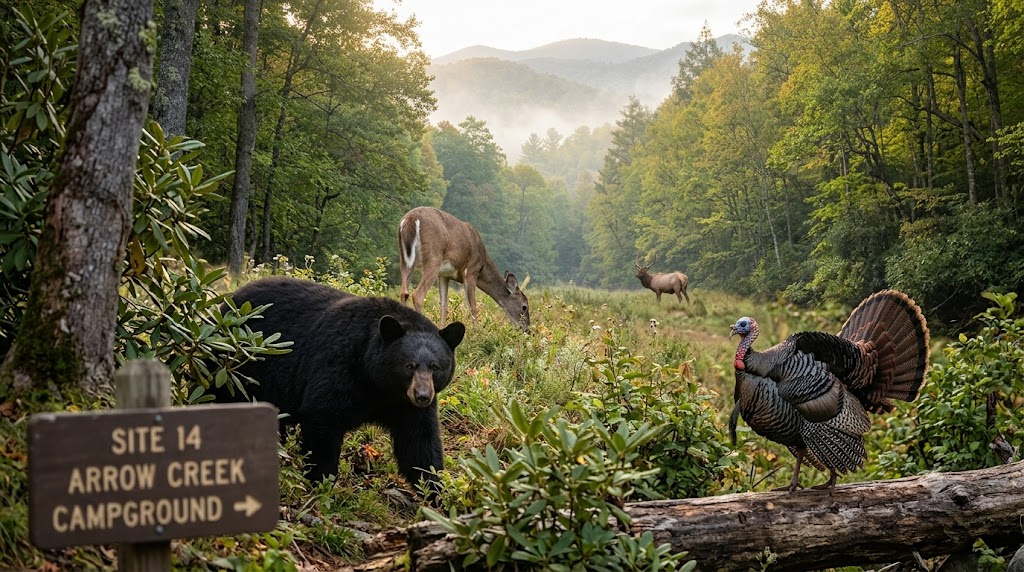
The Great Smoky Mountains are famous for their breathtaking scenery, but the wildlife is just as memorable as the mountain views. Whether you’re enjoying your morning coffee outside your RV or taking an evening stroll near your campsite, every day offers the possibility of spotting native animals in their natural habitat. For many visitors, experiencing Smoky Mountain wildlife becomes one of the highlights of their camping adventure.
Located just minutes from Great Smoky Mountains National Park, Arrow Creek Campground provides a peaceful base for exploring the area’s incredible biodiversity while still enjoying comfortable accommodations and easy access to Gatlinburg.
Why the Smoky Mountains Are a Wildlife Haven
Great Smoky Mountains National Park is one of the most biologically diverse national parks in North America. Its wide range of elevations, forests, streams, and meadows creates ideal habitats for hundreds of species of mammals, birds, reptiles, amphibians, and insects.
Camping gives you a unique opportunity to experience this wildlife at a slower pace. Unlike visitors rushing through scenic drives, campers often enjoy the quiet early mornings and peaceful evenings when many animals are most active.
If you’re visiting during spring, you may also enjoy reading our guide to Wildflower Blooms Starting Now: Best Early Spring Trails Near Arrow Creek Campground, where blooming landscapes often attract additional wildlife activity.
Black Bears
Black bears are undoubtedly the most famous residents of the Smoky Mountains. Although they are generally shy and avoid people, they are commonly seen throughout the park, especially during spring, summer, and fall.
You may spot a bear:
- Crossing a hiking trail
- Searching for berries along forest edges
- Walking through open meadows during early morning
- Climbing trees with cubs nearby
While seeing a bear is exciting, always maintain a safe distance. Never approach bears for photographs or leave food unattended at your campsite. Proper food storage helps protect both visitors and wildlife.
White-Tailed Deer
White-tailed deer are among the easiest animals to observe while camping in the Smokies. They are especially active during dawn and dusk when temperatures are cooler.
Popular places to see deer include:
- Open fields
- Campground edges
- Quiet roadside clearings
- Meadow areas near hiking trails
Their calm nature makes them excellent subjects for wildlife photography, provided you continue giving them plenty of space.
Wild Turkeys
Wild turkeys have made an impressive comeback throughout East Tennessee. These large birds often travel in groups and can frequently be seen foraging along roadsides or open grassy areas.
During spring, male turkeys display their impressive fan-shaped tails as part of their mating rituals, creating one of the Smokies’ most memorable wildlife displays.
Elk
Although elk disappeared from the Smokies many years ago, successful restoration efforts have brought them back to portions of the national park.
The best opportunities to see elk are generally in the Cataloochee Valley, where visitors often observe:
- Grazing herds during sunrise
- Bulls with impressive antlers during autumn
- Calves alongside their mothers during late spring
Because elk are large wild animals, always observe them from a safe distance.
Birds You’ll Hear Before You See
The Smokies are home to over 200 bird species throughout the year, making the area a favorite destination for birdwatchers.
Depending on the season, you may encounter:
- Pileated woodpeckers
- Wild turkeys
- Eastern bluebirds
- Scarlet tanagers
- Barred owls
- Red-tailed hawks
Even if you aren’t an experienced birder, waking up to birdsong is one of the most relaxing parts of camping in the mountains.
Smaller Wildlife Worth Watching
Not every memorable wildlife encounter involves large animals.
Keep an eye out for:
- Eastern gray squirrels
- Chipmunks
- River otters near waterways
- Box turtles
- Salamanders
- Colorful butterflies
The Great Smoky Mountains are often called the “Salamander Capital of the World” because they support more salamander species than almost anywhere else on Earth.
Best Times for Wildlife Viewing
Your chances of seeing Smoky Mountain wildlife increase significantly when you visit during the animals’ most active hours.
Early Morning
Shortly after sunrise is one of the best times for wildlife viewing. Cooler temperatures encourage many animals to forage before the day warms up.
Evening
As the sun begins to set, deer, bears, and many bird species become active again.
Seasonal Highlights
- Spring: Baby animals, migrating birds, blooming wildflowers
- Summer: Birds, deer, butterflies, black bears
- Fall: Elk rutting season, colorful foliage, active bears preparing for winter
- Winter: Fewer crowds make wildlife easier to spot in some areas
If you’re planning a spring camping trip, our March Camping Weather in Gatlinburg: What to Pack for Perfect Spring Conditions guide can help you prepare for changing mountain weather.
Wildlife Watching Tips
Responsible wildlife viewing helps preserve the park for future generations.
Follow these simple guidelines:
- Carry binoculars instead of trying to get closer.
- Keep pets under control at all times.
- Stay on designated trails.
- Never feed wild animals.
- Store food securely inside your RV or approved containers.
- Remain quiet and patient while observing wildlife.
Respecting wildlife allows animals to remain wild while creating safer experiences for everyone.
Stay Close to Nature at Arrow Creek Campground
One of the biggest advantages of staying at Arrow Creek Campground is its convenient location near Great Smoky Mountains National Park while still offering the comforts campers appreciate after a day outdoors. Guests can enjoy peaceful surroundings, easy access to hiking trails, scenic drives, and countless wildlife viewing opportunities before returning to comfortable RV sites, cabins, or tent accommodations.
Whether you’re hoping to catch your first glimpse of a black bear, photograph a white-tailed deer at sunrise, or simply enjoy listening to birds as you sip coffee outside your campsite, every visit offers something different.
With a little patience and respect for nature, your next camping trip could become an unforgettable wildlife adventure in the Smokies.