
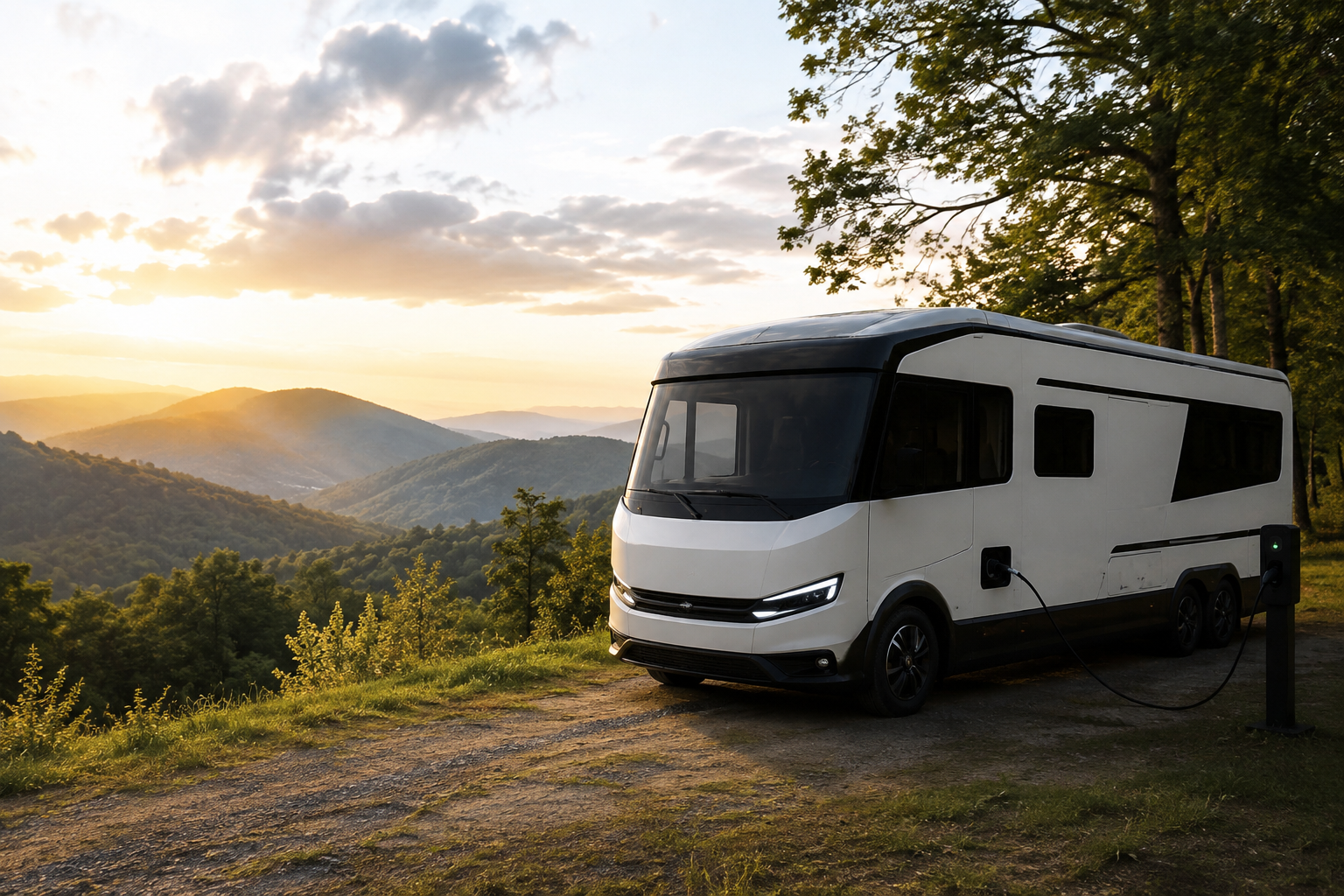
Electric vehicles have become a normal sight on American roads, but electrification is beginning to reach a much larger type of vehicle: the RV.
The conversation around electric RVs in 2026 is no longer simply about futuristic prototypes. Electric camper vans, electrified travel trailers, improved batteries, solar systems, and smarter energy-management technology are giving travelers a glimpse of what RV camping may look like in the coming years.
But there is an important question for travelers interested in destinations such as Gatlinburg and the Great Smoky Mountains: Are electric RVs actually ready for mountain adventures?
What Do We Mean by Electric RVs?
The term “electric RV” can describe several different types of vehicles.
Some are fully electric camper vans built on battery-powered vehicle platforms. Others are electric or hybrid motorhomes that combine alternative powertrains with traditional RV features. There are also increasingly sophisticated travel trailers with large battery banks, solar panels, electric appliances, and technology designed to reduce dependence on generators.
This distinction matters because not every electrified RV faces the same challenges.
A trailer with a large battery system still relies on its tow vehicle for transportation. A fully electric motorhome, however, must use its battery for both driving and, depending on its design, some of the energy needed at camp.
The Biggest Question: Driving Range
Range remains one of the most important considerations surrounding electric RVs in 2026.
Large recreational vehicles are heavy and require considerable energy to move. Mountain roads can make energy consumption even less predictable because of elevation changes, weather, vehicle weight, driving speed, and use of climate-control systems.
That does not necessarily make electric RV travel impractical. It simply means route planning becomes more important.
A traveler heading toward the Smokies should identify charging locations before leaving home rather than assuming a convenient charger will appear when the battery gets low.
This is particularly important when leaving major interstate corridors and traveling toward mountain communities.
Mountain Driving Creates a Different Test
The Smoky Mountains provide a much different environment from flat highway travel.
Long climbs require additional energy. Cooler weather can affect battery performance, and heavily loaded vehicles consume more power. On the other hand, regenerative braking in an electric vehicle can recover some energy while descending hills.
Drivers still need to approach mountain roads conservatively.
Know your vehicle’s realistic range rather than relying entirely on its maximum advertised figure. Leave a comfortable battery reserve and account for unexpected detours, traffic, weather, and elevation changes.
Arrow Creek has previously covered several RV technology upgrades worth considering in 2026, including energy monitoring, lithium batteries, solar systems, and portable power stations. Many of these technologies are also becoming increasingly relevant as RV travel becomes more electrified.
Charging Requires More Planning Than Fueling
Traditional RV travelers can usually locate a gas station relatively easily. Electric RV travelers have another variable to consider: whether a charging location can physically accommodate their vehicle.
A charging station designed around passenger cars may have tight parking spaces, short cables, height restrictions, or an arrangement that is difficult for a long camper or a vehicle towing a trailer.
Before traveling, check:
- Charger location and availability
- Charging speed
- Vehicle clearance
- Parking configuration
- Distance between charging stops
- Alternative chargers along the route
Building backup charging locations into your itinerary can prevent one unavailable charger from disrupting the entire trip.
What About Electricity at Camp?
Driving is only part of the equation.
Modern RVs use electricity for everything from refrigerators and lights to air conditioning, laptops, entertainment systems, and kitchen appliances.
That makes energy management especially important.
Solar panels can help recharge house batteries, although they should not automatically be viewed as a replacement for vehicle charging. Their usefulness also varies considerably according to weather and campsite conditions.
Tree cover is another factor around the Smokies. A beautiful shaded campsite may be comfortable during summer, but it can reduce solar production.
Smart battery monitoring can help travelers understand exactly how much energy they are consuming instead of guessing.
Technology Can Make Electric RV Travel Easier
One encouraging development is that RV technology is improving alongside electrification.
Navigation systems can help drivers locate chargers and estimate arrival battery levels. Smartphone apps provide information about charging networks. Battery-management systems provide more detailed energy data, while connected RV systems can monitor temperature and electrical usage.
Travelers interested in building a more technology-friendly rig can also review Arrow Creek’s guide to RV technology upgrades before their next trip.
The key is using technology as a planning tool rather than depending on it blindly.
Don’t Forget the Destination
It is easy to become so focused on range and charging that you forget why you bought an RV in the first place.
The purpose is still to explore.
Great Smoky Mountains National Park remains open year-round, although individual roads and facilities can be affected by seasonal schedules, construction, and weather. Travelers can review current information through the National Park Service’s Great Smoky Mountains planning resources before setting out.
Once you’re settled near Gatlinburg, your electric RV becomes your base for hiking, wildlife viewing, scenic drives, and exploring the surrounding communities.
Arrow Creek’s guide to the best sunrise and sunset hikes near the campground is a useful place to start planning those adventures.
Are Electric RVs Ready in 2026?
The answer depends on what you expect from them.
For travelers who enjoy planning routes, understanding their energy consumption, and researching charging options, electric RVs in 2026 are becoming far more realistic.
They still require more preparation than conventional RVs, particularly when traveling through mountainous or less-developed areas. Charging infrastructure, range, campsite power needs, and vehicle size all need to be considered.
For Smoky Mountain travelers, that extra preparation can be worthwhile. Plan the route carefully, know your vehicle’s limitations, keep backup charging options available, and then allow the technology to fade into the background.
After all, once you arrive in the Smokies, the mountains should be getting your attention, not the battery percentage.